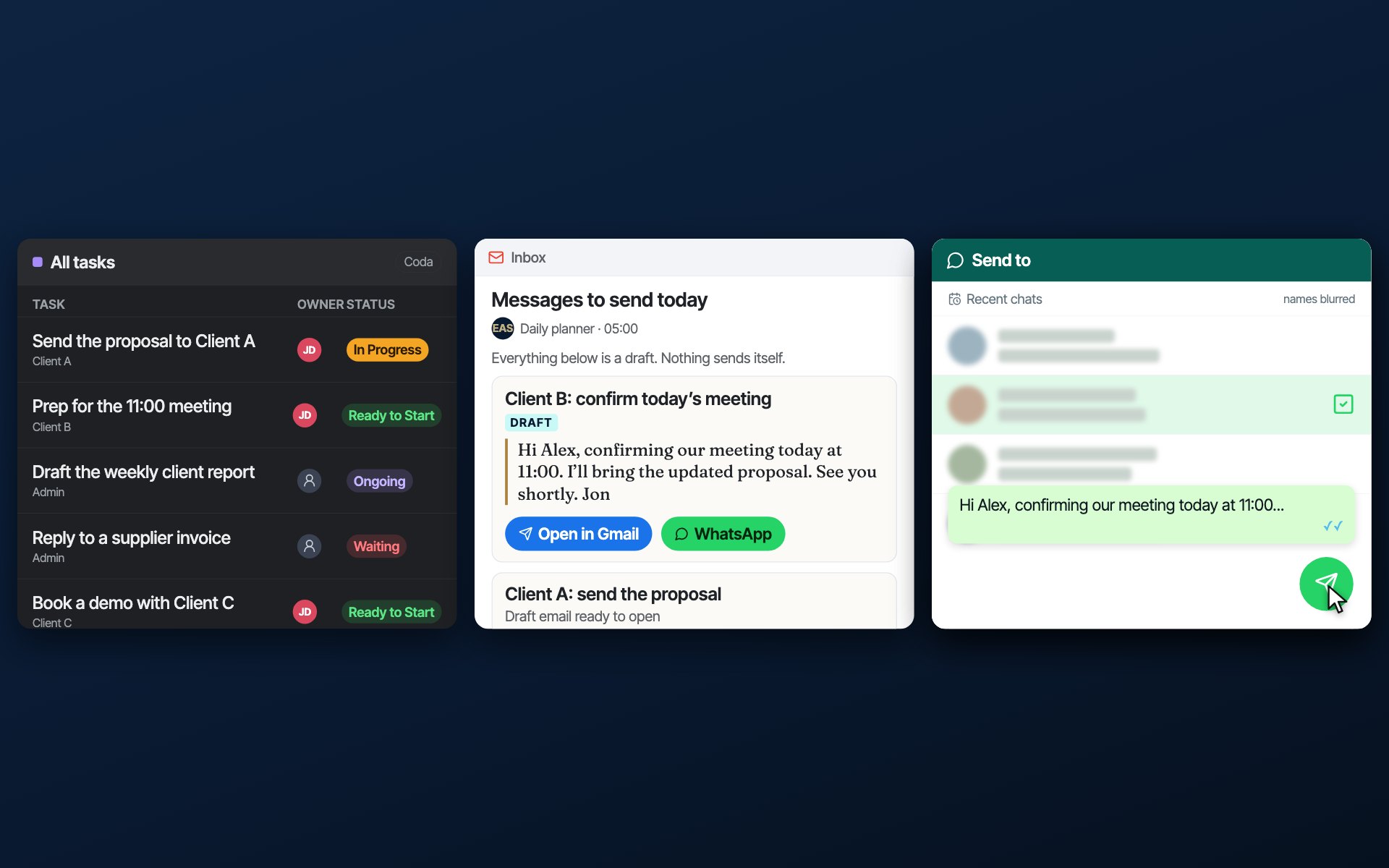
How a task on the board becomes a message sent in one click
Each stage is a drawing of the screen, with sample data in place of client names.
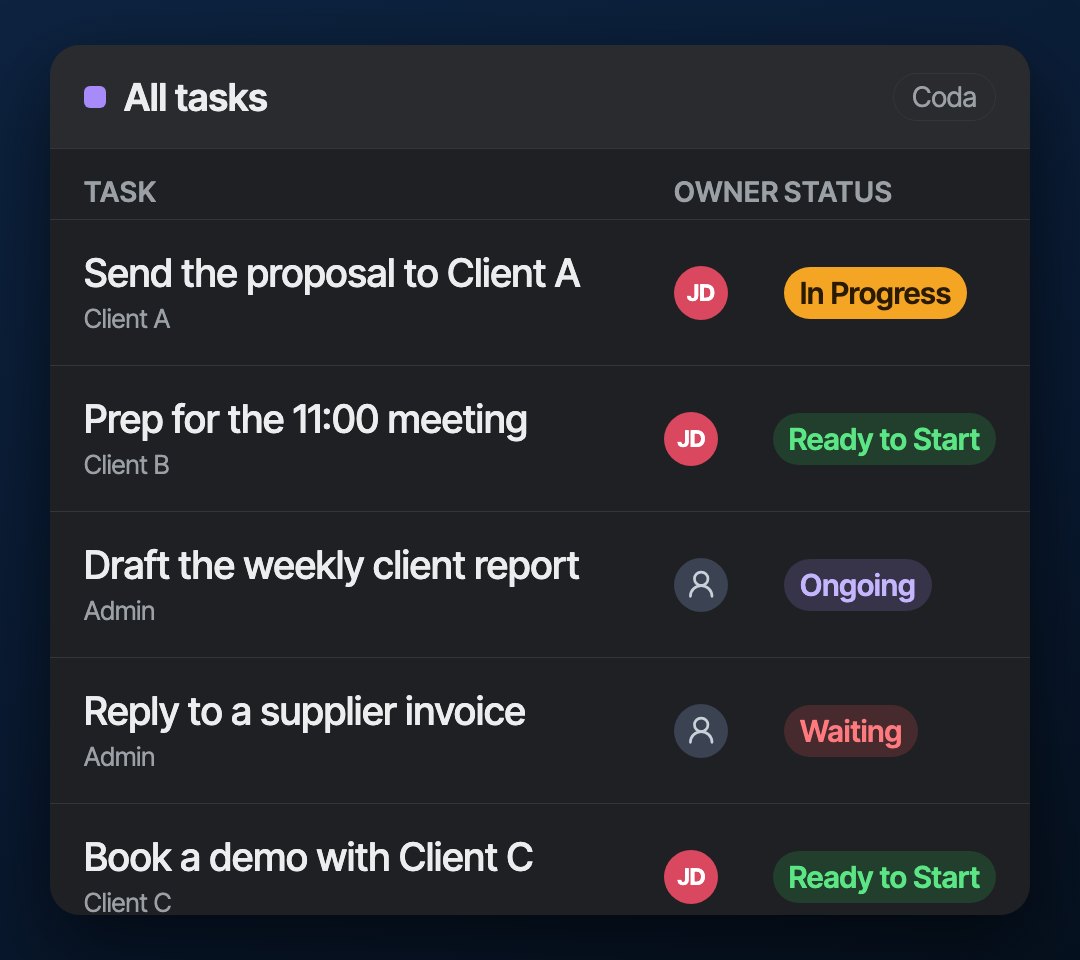
Every task lives on one board
Each task has a name, the person responsible, a status, a priority and the client it belongs to.
The board is in Coda, so everyone works from the same list.
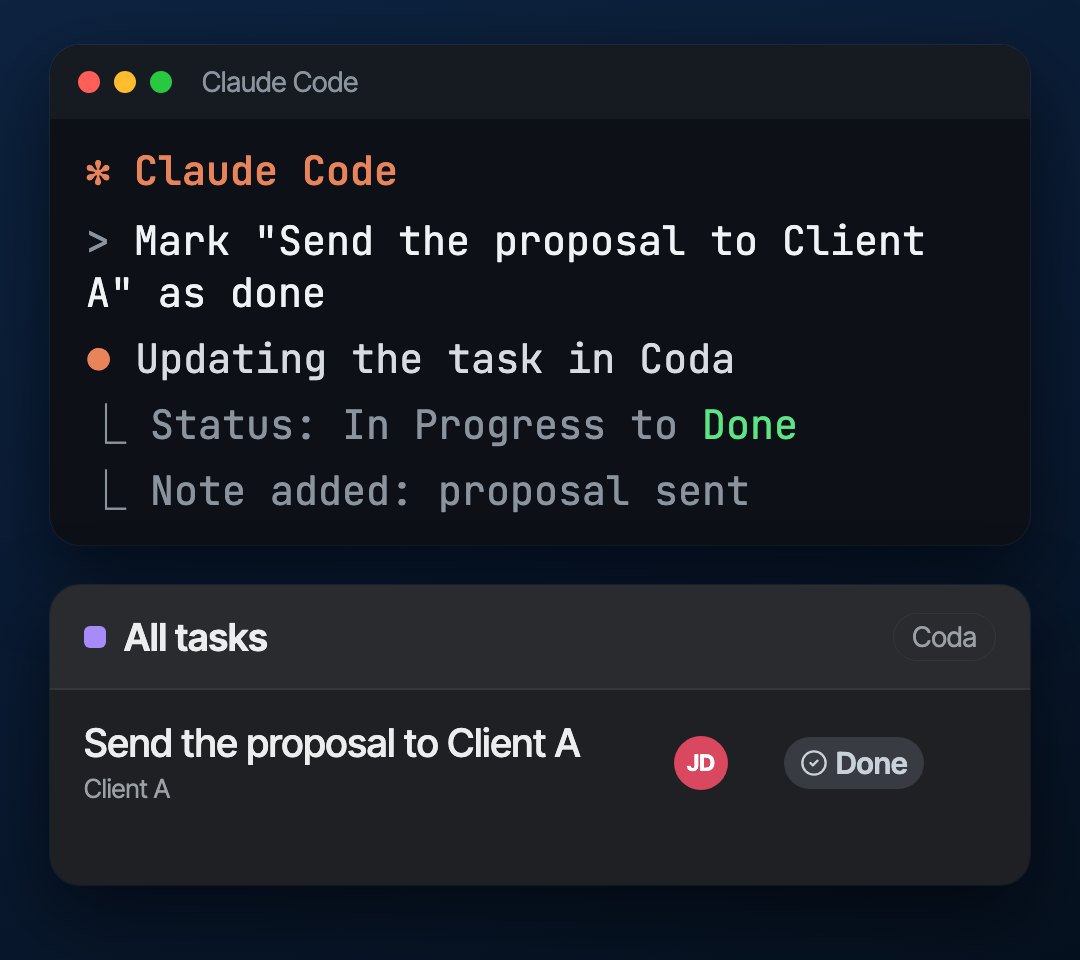
Claude Code updates the board as work gets done
Claude Code reads the board and changes it: it marks a task done, adds a note, or adds the next step.
The board keeps up with the work, so the morning emails start from what is true.
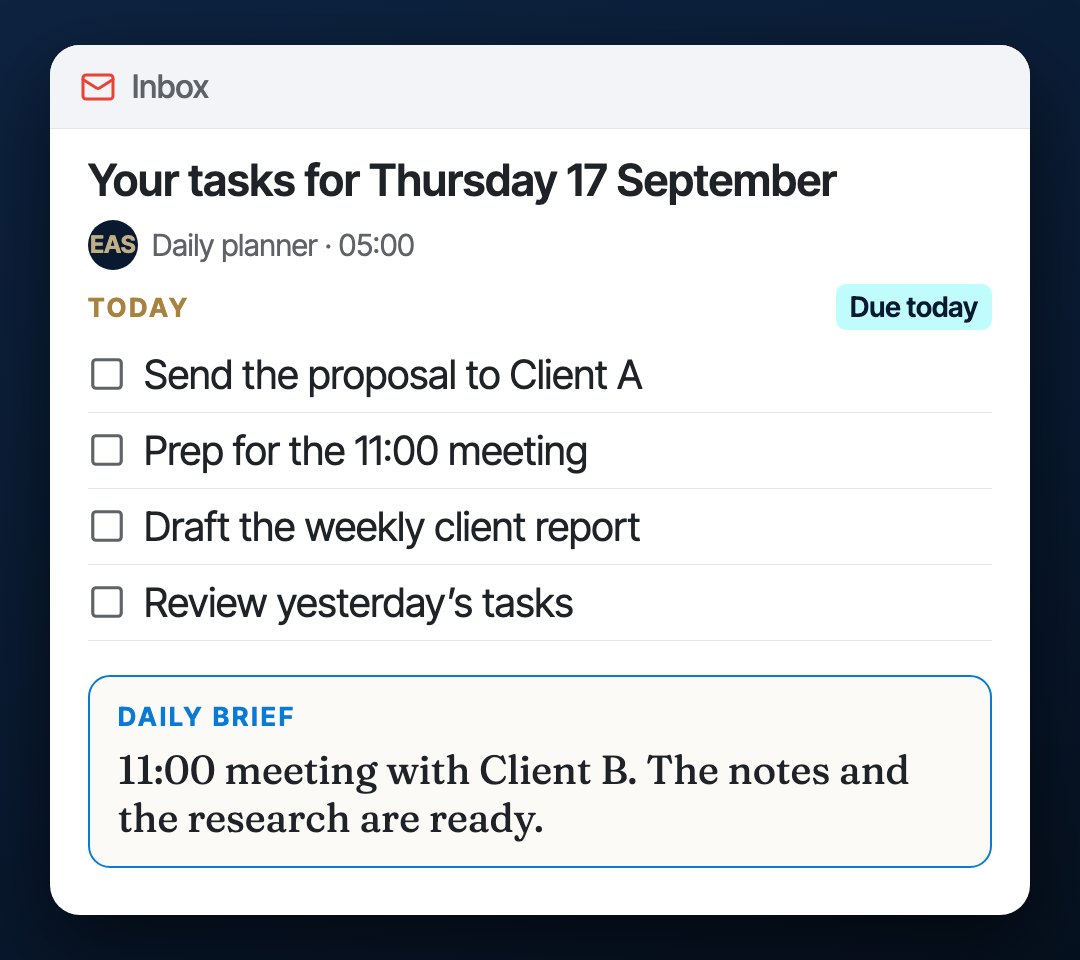
A morning email lists the day's tasks
The tasks due today arrive by email before the day starts, with a brief for each meeting.
The same list is printed, so the day can be worked through on paper.
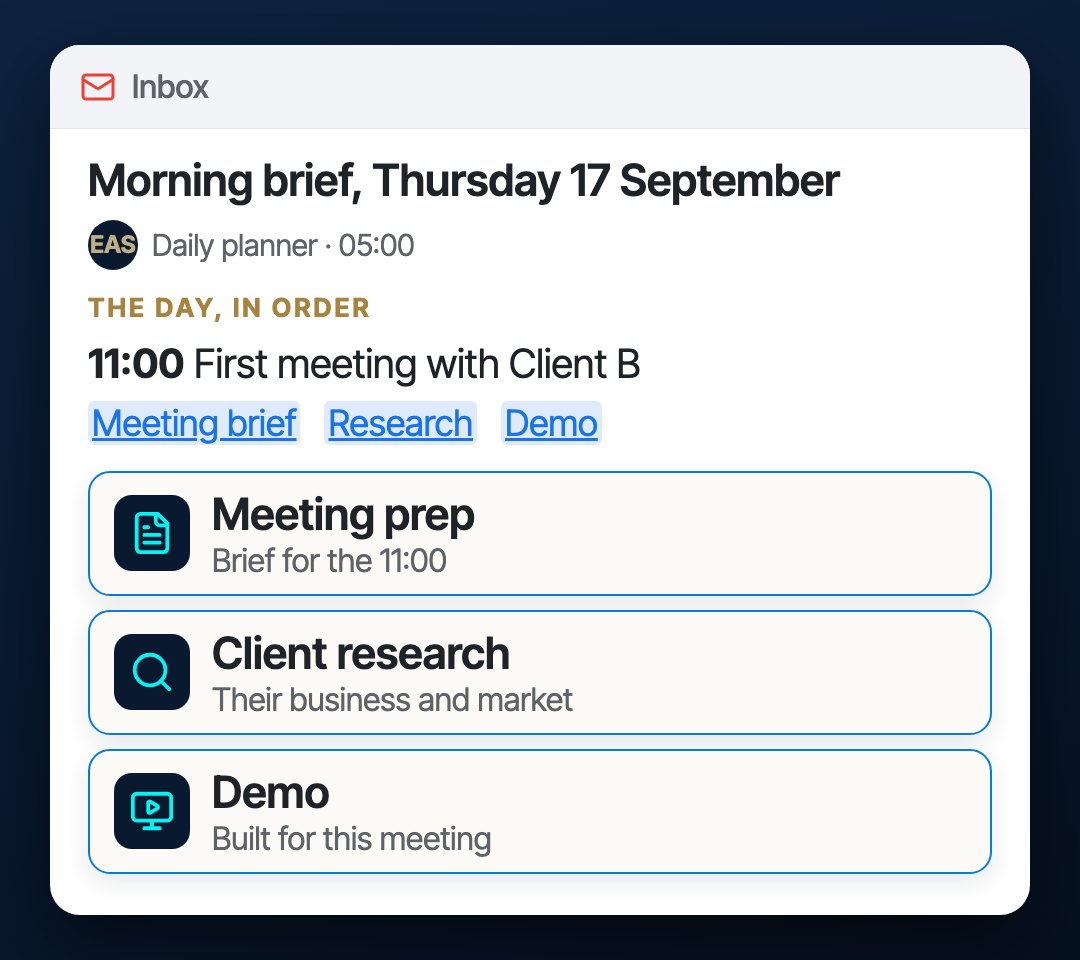
Every meeting comes with its documents prepared
The brief links the documents made for each meeting: notes to prepare with, research on the client, and a demo where one is needed.
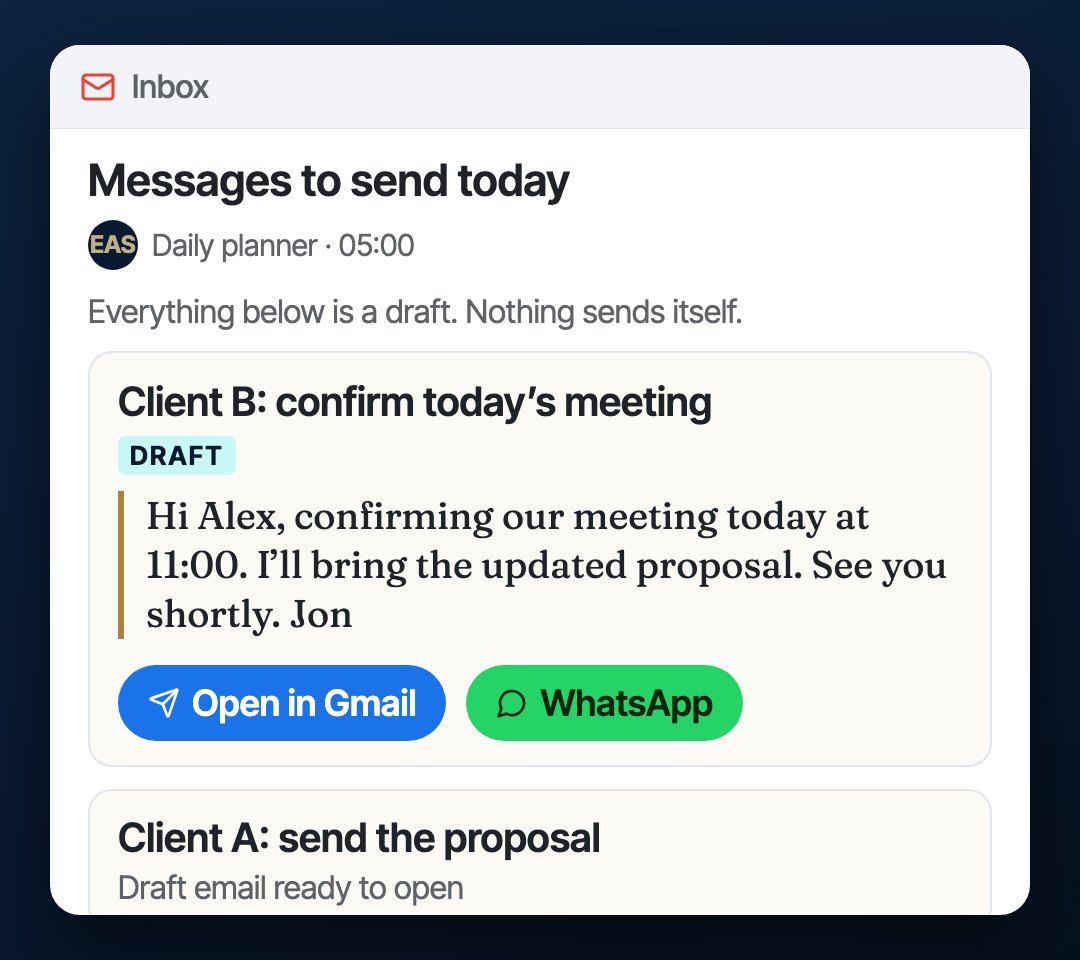
Every message is drafted and opens in one click
A second email drafts each message the day's tasks call for. One click opens the draft in Gmail, written and ready.
Nothing sends itself. A person reads each draft and presses send.
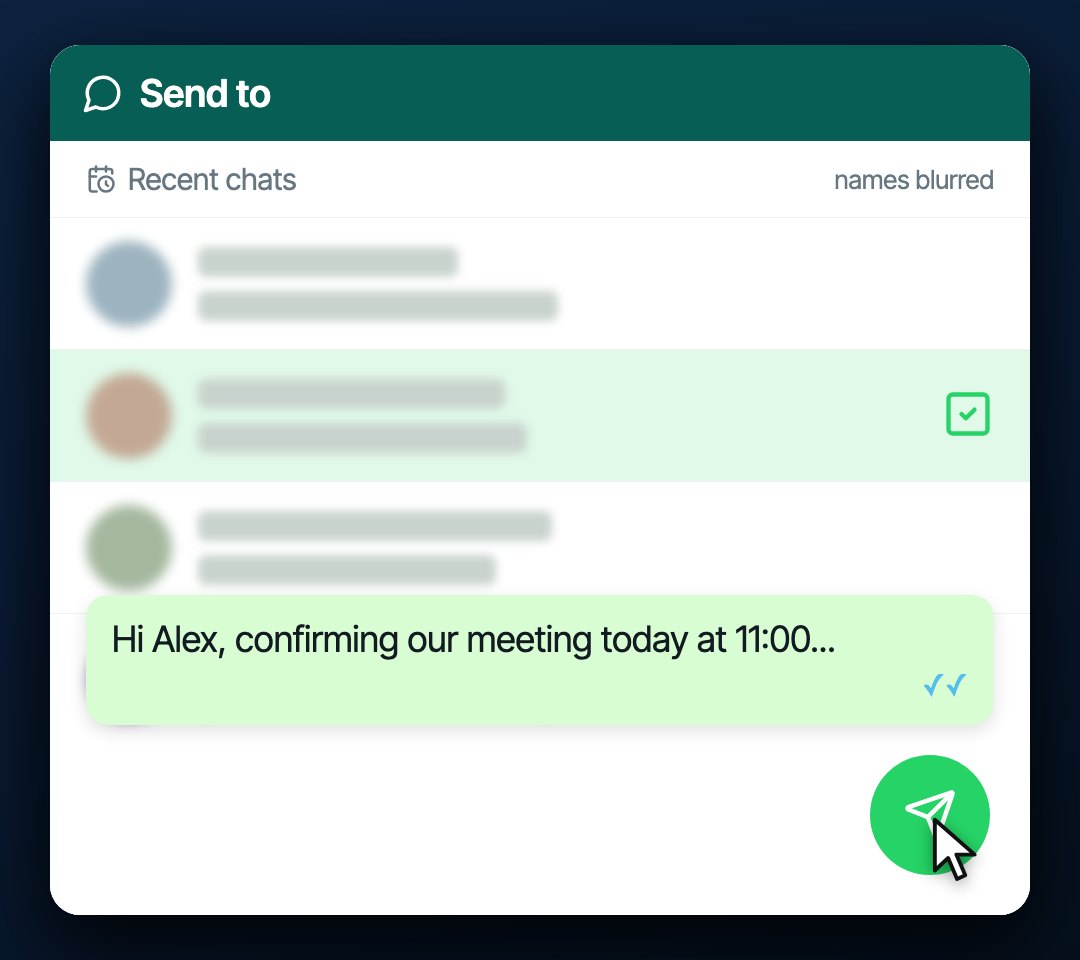
WhatsApp opens with the message ready to send
Choosing WhatsApp opens the app with the message filled in. Pick the chat and send it.
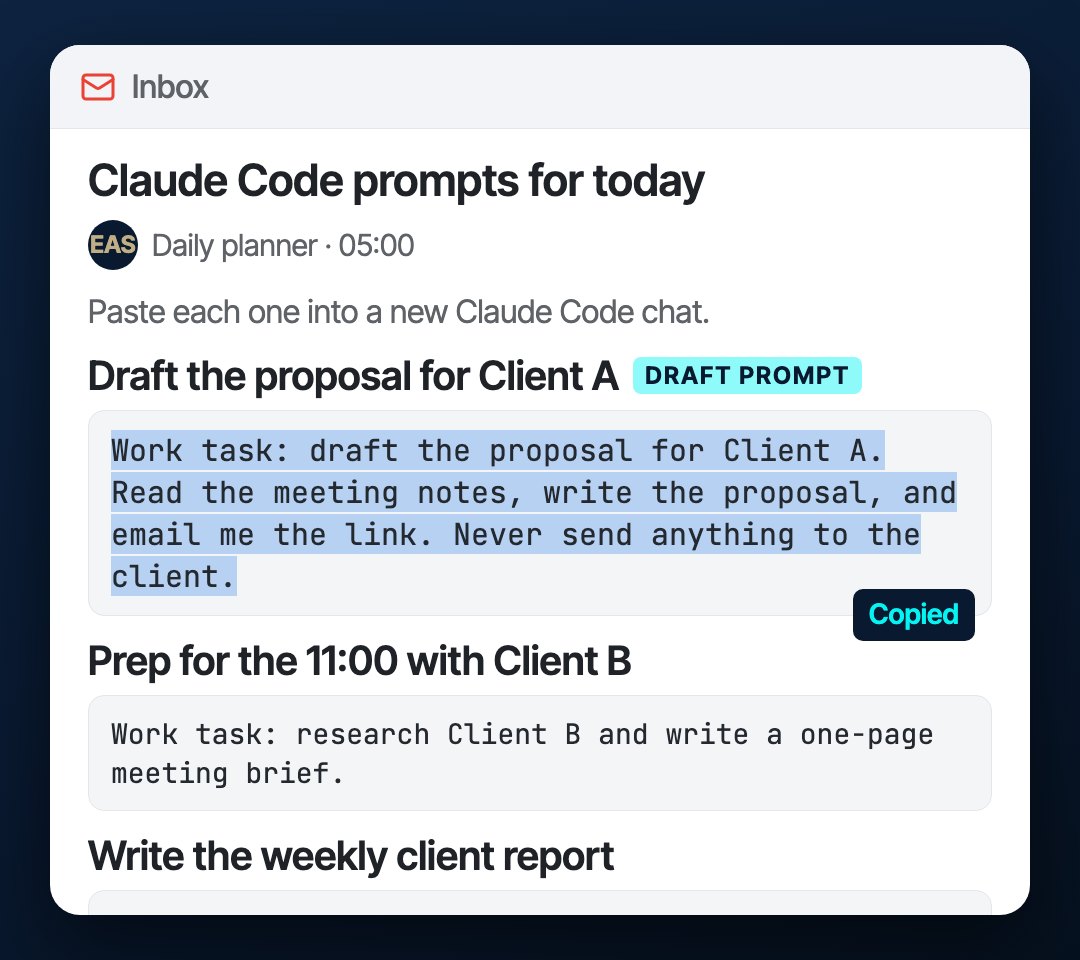
Tasks Claude Code can do come with a prompt
For each of those tasks the email includes a draft prompt to paste into Claude Code.
Writing a clear instruction takes time. Starting from a draft saves it, and a person still decides what runs.