Lots arrive, get catalogued by hand, sell, and then somebody works out who is owed what. Bidders wait on verification with no way to check. Payment and collection deadlines live in somebody's memory, and the catalogue is retyped every week.
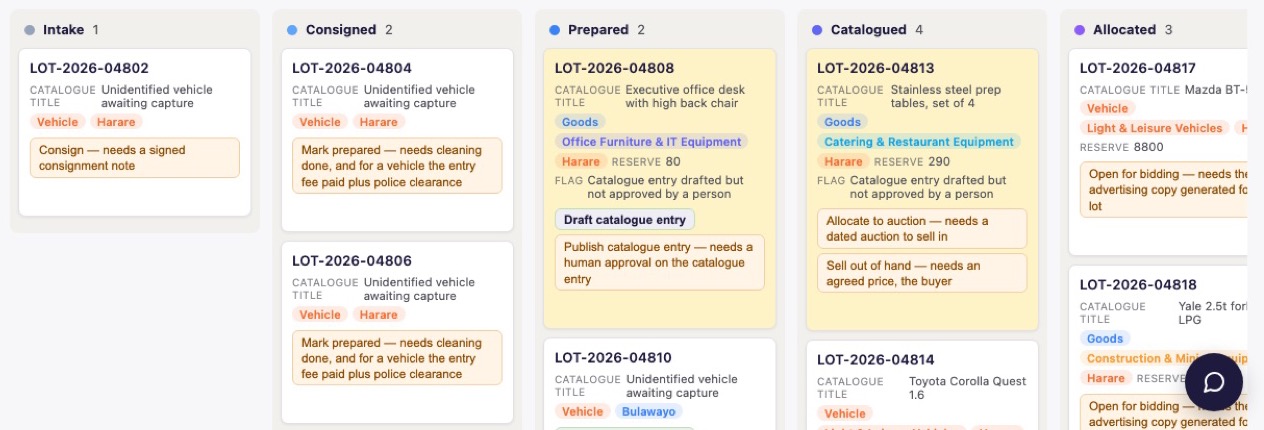
A floor system carrying a lot through consignment, cataloguing, sale, payment, collection and payout. Each step refuses to advance until the evidence for it exists, and names the missing piece in plain language. An assistant reads photographs of a lot and proposes the title, description, category, condition grade and reserve for a named person to approve. Bidder verification runs as a queue with only the exceptions reaching a human. The payment and collection clocks run themselves and raise their own flags.
The refusals are the product, and they are tested as such. A lot short of its paperwork stays where it is however complete the rest of the record looks, and the system says which document it is waiting for.
The lot volume and the render time are measured from the system under that load. The checks are automated tests, each asserting that the system refuses a move it has no evidence for. The clocks are configuration in the delivered system rather than a description of it.
This page once carried claims that described the work inaccurately. They came down in an audit of our own copy, and each one went back up only when its numbers could be traced to something measured. A case study you cannot check is worth nothing to you, and one that turns out to be wrong costs us more than it ever earned.